A locksmith got a complaint from a customer who’d been sent to an address he hadn’t operated out of in four years. When he looked into it, the wrong address wasn’t on his website or his Google Business Profile. It was buried in a data aggregator listing he didn’t remember ever submitting information to directly, one that several map and navigation apps apparently still pull from.
Business Data Moves Through a Supply Chain You Don’t Control
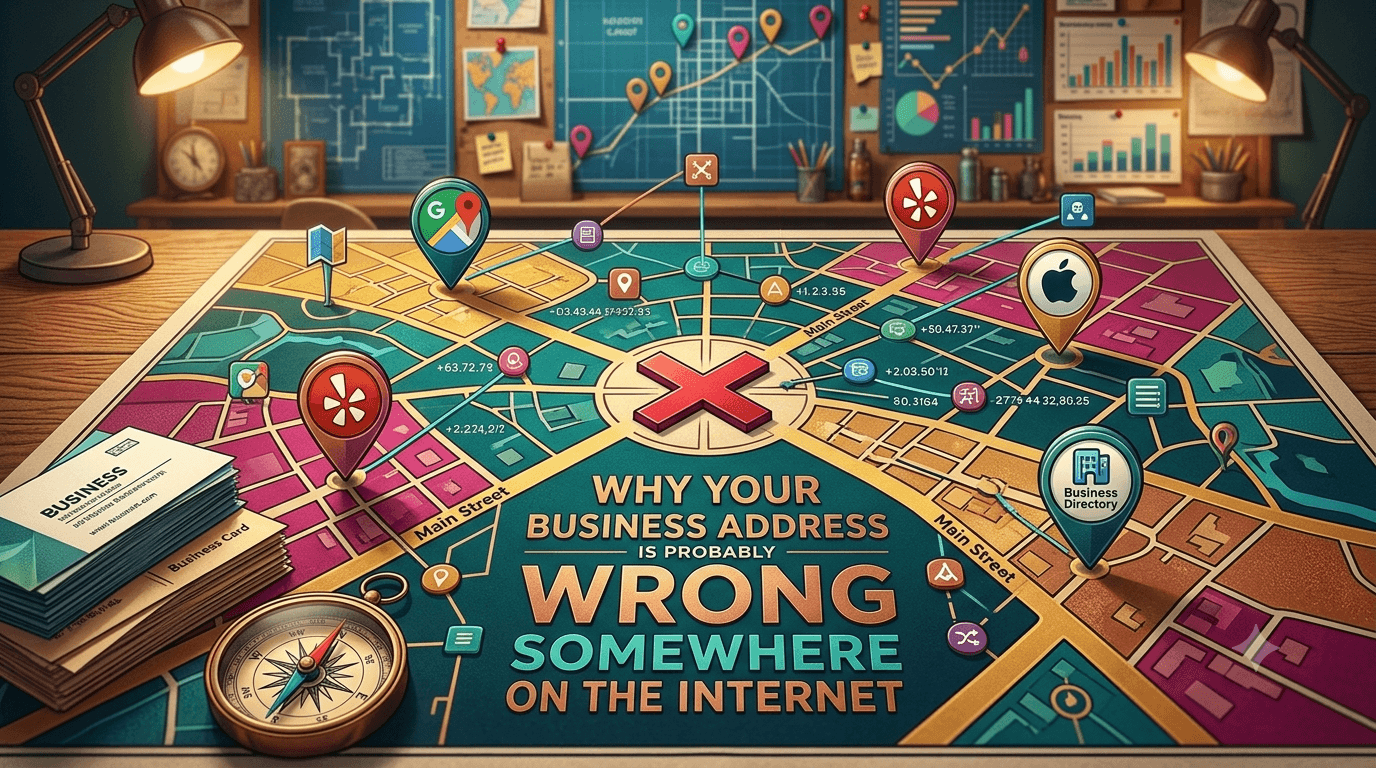
Business information doesn’t always originate from a single source the owner manages directly. Data aggregators and syndication services collect and redistribute business details to a wide range of apps, directories, and mapping tools. That means a piece of information can end up somewhere you never personally entered it, simply because it was picked up from a source further back in that chain. It’s not a flaw exactly, more a byproduct of how widely business data gets shared and reused across the web.
One Wrong Entry Can Get Copied Downstream
If an old address or a mistyped phone number sits in one of these upstream data sources, it can get pulled into several other platforms that all draw from the same feed. That’s often why an owner finds the same incorrect detail showing up in multiple, seemingly unrelated places at once, without ever having entered it more than once themselves. It also explains why fixing one visible listing sometimes doesn’t solve the problem: the real error is further upstream, feeding several downstream copies at the same time.
Tracing It Down Beats Guessing at Fixes
Rather than correcting random listings one at a time and hoping something sticks, it helps to work methodically: start with your Google Business Profile, then check major, well-known directories, including a verification-focused platform like Trace Businesses, and correct information at the most authoritative source you can identify rather than only patching whatever shows up first in a search. Tracing the likely origin of an error, when you can identify it, tends to be more effective than chasing every downstream copy individually.
Conclusion
Most business owners never set out to have wrong information floating around online. It usually arrives through a data chain nobody thinks about until a customer gets sent to the wrong door. A periodic check of your most visible listings, starting with your Google Business Profile and extending to accuracy-focused platforms like Trace Businesses, is a practical way to catch this before it costs you a customer.