
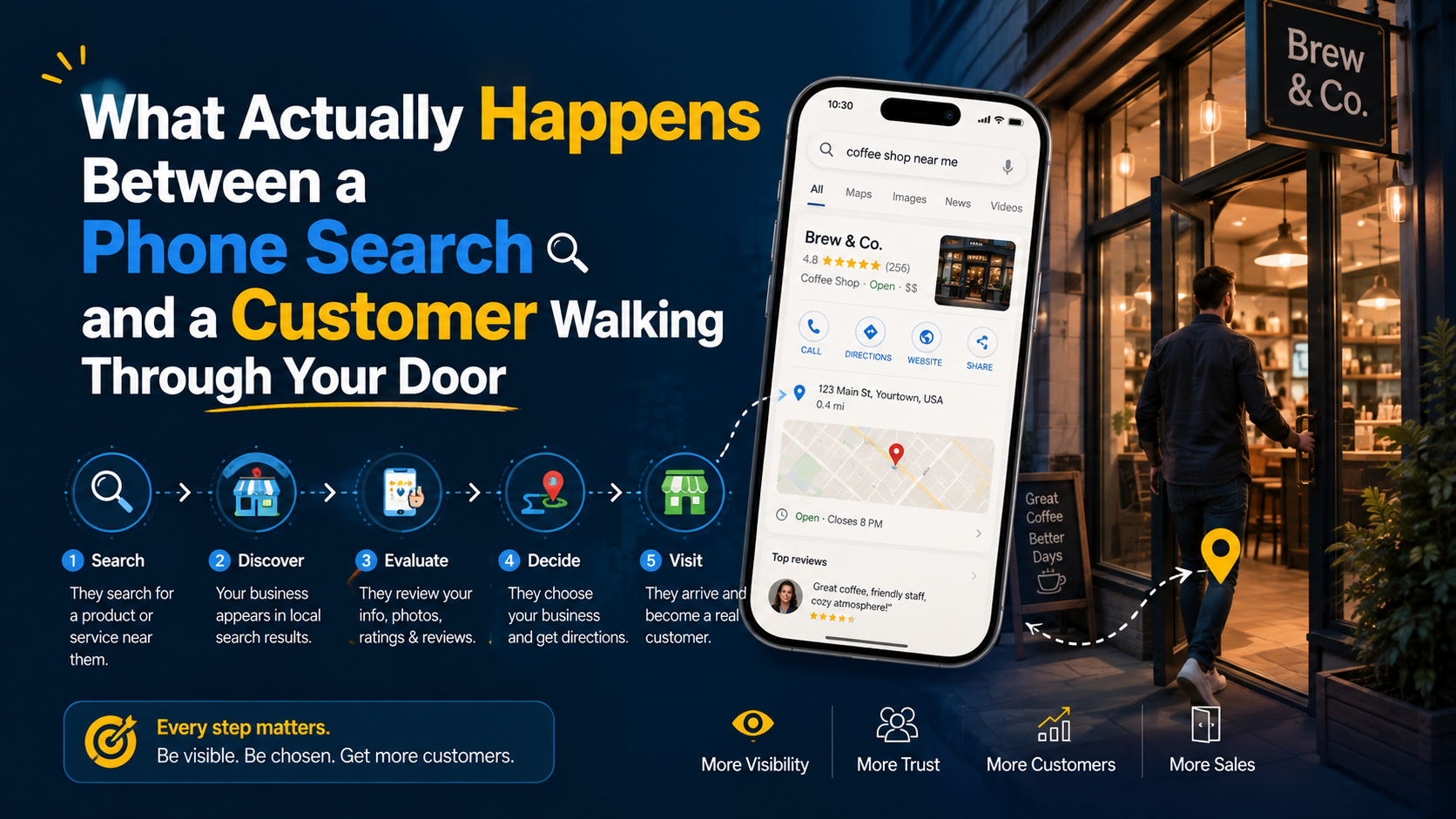
Someone stands on a sidewalk, undecided about lunch, thumb already moving across their phone. They type three or four words, glance at the first few results, tap one, and either walk toward it or don’t. That whole sequence takes under a minute, and for a lot of business owners, it’s the actual moment their marketing efforts either pay off or quietly fail. Understanding what happens in that minute is more useful than chasing every new marketing trend that comes along.
The Results Page Filters Before Anyone Reads a Word
Before a potential customer reads a single review, the search results page has already filtered their options. The map pack, the businesses with real photos versus a gray placeholder icon, the ones marked “Open Now” versus “Closed,” all of that gets processed almost instantly, often before the person consciously registers what they saw. A business with an unclaimed or incomplete Google Business Profile is competing at a disadvantage before the comparison even starts. This isn’t about tricking an algorithm. It’s about giving someone accurate, complete information at the exact moment they’re deciding where to spend the next twenty minutes.
Then Come Three Fast Comparisons
Once a few options survive that first filter, most people run through the same quick checklist without thinking of it as a checklist at all: is it actually open right now, how far is it, and does it look legitimate. A blurry, five-year-old photo or a rating with only two reviews raises quiet doubt, even if nothing is technically wrong. This is where a secondary source, like a category listing on Local List, can reinforce what someone already suspects: that this is a real, active business with consistent details. It won’t replace a strong Google Business Profile, but it adds one more point of confirmation for someone who’s still deciding.
The Final Decision Leans on Trust, Not Just Convenience
By the time someone taps “Directions” or picks up the phone, convenience has already done its job. What usually tips the decision the rest of the way is some form of trust: a handful of recent reviews that sound like real people, a response from the owner to a complaint, a photo that looks like it was taken this year instead of five years ago. None of that happens by accident. It’s built through ordinary habits, responding to reviews, updating photos occasionally, keeping hours current, especially around holidays when a wrong closing time can cost you a visit entirely.
Conclusion
That entire sequence, filter, compare, decide, usually takes less than a minute, and almost none of it involves anything flashy. It comes down to whether your information is accurate and current in the places people actually look, starting with your Google Business Profile and extending to other relevant listings, including directories like Local List. Getting the basics right consistently tends to matter more than any single clever marketing move.